
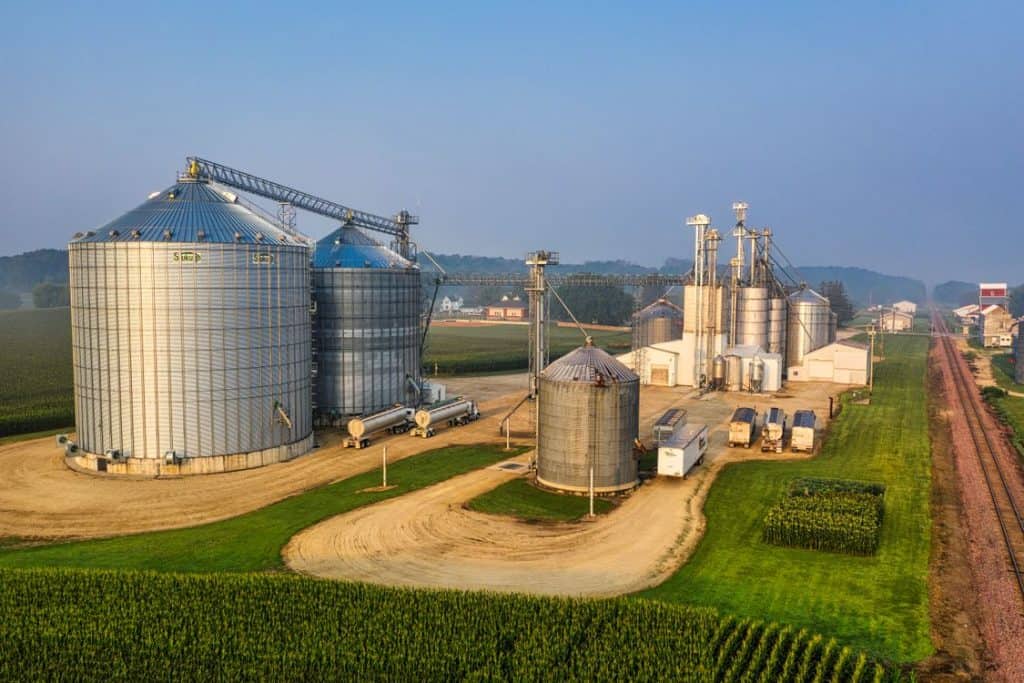
Every grain-producing region eventually runs into the same math problem: harvest arrives faster than storage capacity can absorb it. This autumn Ukraine is running that problem at a scale that’s caught the attention of agricultural officials well beyond its own borders.
The country’s agriculture ministry went public with a number that’s hard to ignore. Ukraine’s grain silo capacity is facing a gap between what’s coming out of the fields and where it can actually be put, and the ministry has already requested outside assistance to bridge it.
The numbers behind the shortfall
Ukrainian officials say the storage shortfall could reach 11 million tons, and they’ve formally requested US assistance for temporary on-farm storage equipment to close that gap before the harvest overwhelms existing infrastructure.
The context makes it worse, not better. Ukraine has already collected over 17 million metric tons from roughly a third of its sown area, and analysts project the full 2026 harvest could surpass 60 million tons. Around 39 million tons is expected to move into export channels, with carryover stocks projected at a record 14.3 million tons. Grain with nowhere to go and nowhere to sit while it waits.
Why mid-autumn is the breaking point
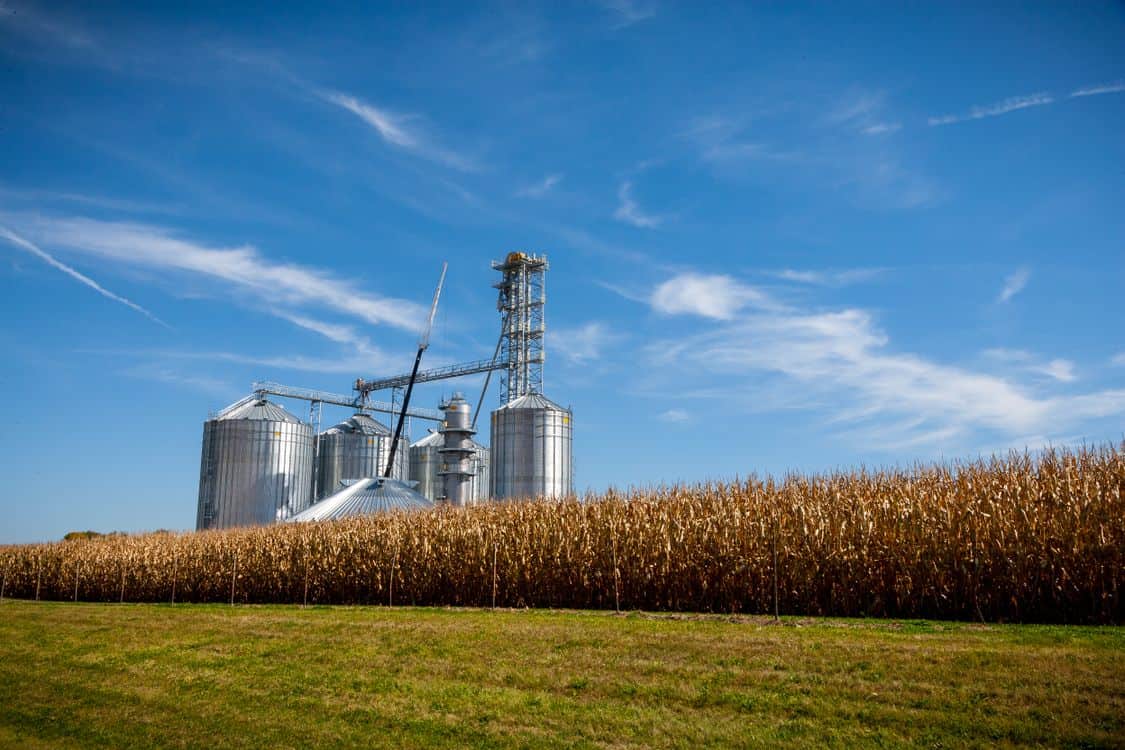
The ministry has identified a specific window as most dangerous: mid-autumn, roughly September through October, when elevators are still full of unexported wheat and barley right as farmers begin a large-scale corn harvest. Two harvests colliding in storage space sized for one.
Export logistics haven’t helped. Black Sea ports, which historically accounted for roughly 90 percent of Ukraine’s grain shipments, are dealing with disruptions that have slowed the export pipeline that would normally relieve pressure on domestic storage. When grain can’t move out fast enough, it backs up into elevators that were never designed to function as long-term warehousing.
Farmers without adequate on-site storage face a bad choice during a bottleneck like this: sell into a depressed harvest-time market immediately, or risk quality degradation in makeshift storage that wasn’t built for the job. Neither is good, and both compound the economic damage of a shortfall that starts as a logistics problem and ends as a farm income problem.
The broader lesson for storage infrastructure
Ukraine’s situation is extreme, driven by wartime disruption to its primary export routes. But any region with growing production and static or lagging storage infrastructure eventually hits the same wall: a harvest exceeding what existing elevators, hopper-bottom or flat-bottom, can actually hold.
Grain storage planning has traditionally been driven by average-year assumptions. What Ukraine’s autumn crunch shows is the cost of planning for average instead of the tail-risk scenario, a strong harvest colliding with an export disruption, a price collapse, or both at once.
For agricultural operations watching this unfold, the takeaway is about margin. Storage capacity sized precisely to typical throughput leaves no buffer when circumstances turn atypical, and this autumn is showing what that gap costs when it opens at the wrong moment in the calendar.
The US assistance request centers on temporary on-farm storage equipment, the kind of stopgap that deploys quickly but doesn’t solve the underlying gap. Grain bags, temporary poly-covered piles, and portable aeration equipment can buy time during a specific crunch, but they come with real tradeoffs: higher spoilage risk, less protection from weather and pests, and none of the monitoring and controlled discharge that permanent silo infrastructure provides.
That distinction matters for how the current crisis gets resolved versus how future ones get prevented. Temporary storage addresses this autumn’s bottleneck. It does nothing for next year’s harvest, which analysts already expect could be similarly large given the country’s production trajectory. Permanent storage, hopper-bottom for the quick-turnover portion, flat-bottom for the volumes destined for longer holding, is a fundamentally different investment with a fundamentally different payback horizon. It’s also the only kind of solution that actually closes the gap rather than managing around it one harvest at a time.
Agricultural infrastructure planners outside Ukraine have reason to watch this closely, and not purely out of sympathy. Global grain production has trended upward for years across most major producing regions, and storage investment hasn’t always kept pace on a region-by-region basis. Ukraine’s case is extreme because of the war. The underlying vulnerability, production outrunning storage with a narrow seasonal window where that gap becomes acute, shows up almost anywhere farm output has grown faster than the bins built to hold it.
There’s a financing dimension too that doesn’t get as much attention as the physical shortfall itself. Permanent silo capacity is a multi-year capital commitment, and lenders in agricultural regions tend to size those loans against average harvest volumes rather than the record years. A country or a cooperative that builds only to the average ends up right back in the same bind the next time production spikes, which is part of why some agricultural finance groups have started pushing borrowers toward slightly oversized capacity even when it pencils out worse on paper in a typical year. It’s a slower, less exciting fix than emergency storage assistance, but it’s the one that actually changes the baseline instead of managing the same crisis every few years.
Insurance markets are watching this dynamic too, particularly for cooperatives and large commercial farms that carry crop and storage coverage. Underwriters that priced policies against a typical harvest year are recalculating risk for regions where a record crop and a storage shortfall are now a plausible combination rather than an outlier, and premiums in some grain-belt regions have started reflecting that recalculation ahead of any formal industry-wide repricing.