Breaking News
What Texas’s Failed 2025 Roofing Licensing Bill Means for Austin Contractors
Phoenix just set another electricity-use record. Your house still has its own limits
Ukraine’s Autumn Grain Storage Crunch Is a Warning Sign for Silo Capacity Everywhere
Why Brisbane Patients Are Waiting Longer For a Dermatologist Appointment
Skip to content
  • Home
  • News & Events
  • Contact
  • Privacy Policy
Bodleian Book Shop
  • Home
  • News & Events
  • Contact
  • Privacy Policy
Blog

What Texas’s Failed 2025 Roofing Licensing Bill Means for Austin Contractors

October 9, 2026
Blog

Phoenix just set another electricity-use record. Your house still has its own limits

Blog

Ukraine’s Autumn Grain Storage Crunch Is a Warning Sign for Silo Capacity Everywhere

Blog

Why Brisbane Patients Are Waiting Longer For a Dermatologist Appointment

Blog

Google Quietly Unlocked Vehicle Ads From Performance Max, and Dealers Got Their Budgets Back

New Titles

Blog
October 9, 2026

What Texas’s Failed 2025 Roofing Licensing Bill Means for Austin Contractors

Blog
September 12, 2026

Phoenix just set another electricity-use record. Your house still has its own limits

Blog
August 30, 2026

Ukraine’s Autumn Grain Storage Crunch Is a Warning Sign for Silo Capacity Everywhere

Gallery

What Texas’s Failed 2025 Roofing Licensing Bill Means for Austin Contractors

Phoenix just set another electricity-use record. Your house still has its own limits

Ukraine’s Autumn Grain Storage Crunch Is a Warning Sign for Silo Capacity Everywhere

Why Brisbane Patients Are Waiting Longer For a Dermatologist Appointment

Latest Post

What Texas’s Failed 2025 Roofing Licensing Bill Means for Austin Contractors

October 9, 2026September 5, 2026

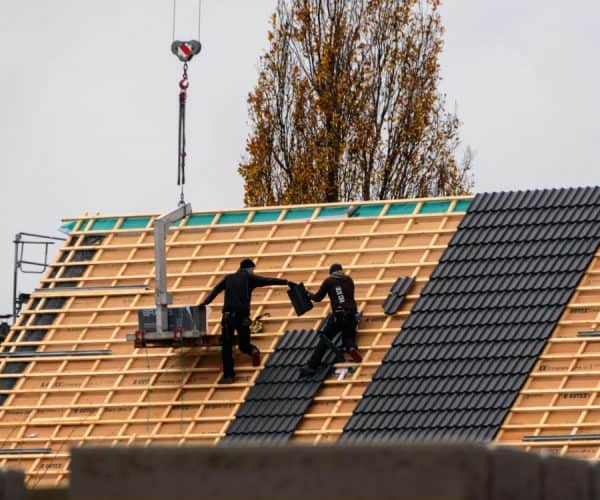
Texas still does not have a statewide occupational license specifically for roofing contractors. House Bill 3344 was a 2025 attempt to create one, and its failure is important because some descriptions of the proposal now read as though the licensing system already exists.

HB 3344 would have created registration and licensing requirements for roofing work, but it did not become law. The proposal is best read as a preview of the compliance framework supporters may try to revive in a future legislative session.

The Bill Cleared Its First Hurdle Before Running Out of Legislative Time

HB 3344 was introduced on February 25, 2025, and assigned to committee for review. It advanced out of that first committee on a 7-1 vote on April 30, 2025, a lopsided margin that suggested real bipartisan appetite for the measure. The bill would have placed licensing authority with the Texas Department of Licensing and Regulation, the same agency that already oversees electricians and other regulated trades.

From there, the bill stalled. It was sent to the House Calendars Committee, the gatekeeper that decides which bills reach a floor vote, and it never got scheduled before the session’s deadlines closed in. The bill effectively died in the House Calendar committee on June 2, 2025, not because lawmakers rejected it outright, but because there wasn’t enough floor time left to reach it amid competing priorities.

Because the bill never reached final passage, it is safer to treat its committee support as evidence of legislative interest rather than proof that a similar measure will pass next time.

The Roofing Contractors Association of Texas Pushed Back on the Small-Business Objection

The most organized support for HB 3344 came from the Roofing Contractors Association of Texas, an industry group that lobbied directly for the bill’s licensing framework. RCAT’s public messaging focused heavily on rebutting the argument that licensing would squeeze out small operators and newer entrants to the trade.

RCAT President Jeanne Boyd Curtis addressed that concern head-on in the group’s public comments, arguing the measure wasn’t designed to favor larger firms. She described the proposal in blunt terms, stating there was “nothing radical, tyrannical, discriminatory, or monopolistic” about the licensing framework under consideration.

The group also pointed to the public comment record as evidence the bill had broader support than its critics claimed. Of 450 public comments submitted on the legislation, RCAT reported 392 were in favor, with only 55 opposed, a ratio that cuts against the narrative of small-contractor resistance sometimes attached to licensing debates.

What the Failed Bill Still Tells Contractors About Possible Future Compliance

HB 3344’s proposed requirements included business registration, insurance or bonding, background checks, and a renewal structure. Contractors can review those provisions as a planning exercise, but none of them should be described as a current state roofing-license requirement.

The proposal was aimed in part at making contractors easier to identify and hold accountable. That concern remains relevant after storms even without a state licensing system.

For homeowners in Austin, Round Rock, and Westlake, the practical reality is unchanged: contractor vetting still relies on insurance, business identity, local history, references, manufacturer credentials where relevant, and permitting practices rather than a Texas roofing-license number. A search for a roofing contractor in Austin still needs to be followed by checks on insurance, business identity, local history, references, and applicable manufacturer credentials.

Texas is something of an outlier nationally on this question. A majority of neighboring states already require some form of registration or licensing for roofing and general home-improvement contractors, which is part of why HB 3344’s supporters framed the bill as catching Texas up rather than breaking new regulatory ground. That comparison keeps coming up in Austin-area contractor circles whenever the bill’s status is raised.

If a similar licensing proposal returns in 2027, smaller operators could face new compliance costs if it passes. Until then, those costs are hypothetical rather than current obligations.

Established firms that already carry insurance, maintain a registered business, and document their work may have less operational change to absorb under a future licensing system, but the exact effect would depend on the language of whatever bill is actually enacted.

The key distinction is simple: HB 3344 was a failed proposal, not a phased-in law. Contractors can watch the 2027 session for a successor bill without telling customers that Texas roofing licensing has already changed.

Phoenix just set another electricity-use record. Your house still has its own limits

September 12, 2026September 5, 2026

Phoenix was deep into another stretch of summer heat on August 2 when APS customers used more electricity in a single hour than they ever had before.

The number was 9,164 megawatts between 6 and 7 p.m.

That broke a record that was only nine days old. On July 24, demand had reached 9,053 megawatts.

APS maintained service through both peaks, according to its August report on the new demand record.

The Arizona grid handled it. That doesn’t mean every electrical system inside every Phoenix house handles a long heat wave equally well.

Heat means equipment runs longer

A record on the utility grid doesn’t force extra current into your electrical panel.

The house takes what its equipment calls for.

The problem during a Phoenix heat wave is duration. An air conditioner that gets long breaks in April may run for much of an August afternoon. Pool equipment is still on. Refrigerators and freezers are working against hot garages. People are home using computers, televisions and kitchen appliances.

None of those loads is unusual by itself.

Stack enough of them together for long enough and a weak connection or marginal circuit gets less time to hide.

That’s why some electrical problems seem to appear during the hottest week of the year even though the heat didn’t create the original defect.

The AC breaker is not a reset button

Suppose the air conditioner shuts off and you find a tripped breaker.

You reset it. The system runs.

Twenty minutes later, it trips again.

Resetting it for the rest of the afternoon isn’t a repair.

Some electrical problems can wait for a scheduled appointment. Repeated breaker trips, a burning smell or a circuit that suddenly goes dead are different; those are the kinds of situations where homeowners may seek professional help for same-day electrical emergencies rather than waiting to see if the problem clears on its own.

Breakers open for a reason. The problem could be in the HVAC equipment, the circuit supplying it, a connection or the breaker itself. Diagnosing which one is at fault matters because the repair is very different in each case.

One shortcut creates a particularly bad situation: replacing a tripping breaker with a larger one simply because the larger breaker stays on.

The breaker is sized around the circuit it protects. Changing its rating without confirming the rest of the circuit was designed for that load can leave the wiring with less protection, not more capacity.

Older Phoenix houses have picked up a lot of new electrical work

An older electrical system isn’t automatically a bad one.

But compare what many homes powered when they were built with what’s plugged into them now.

There may be a larger air-conditioning system, a garage freezer, pool equipment, outdoor lighting, computers in several rooms, an upgraded kitchen and dozens of small electronic loads that didn’t exist when the original service was installed.

Some houses have added workshops. Others now have an EV charger. Remodels may have moved loads around several times without replacing the original panel.

That history matters more than the age printed on a real-estate listing.

A 40-year-old electrical system that’s been maintained and properly updated is one thing. A panel that’s been modified repeatedly with little documentation is another.

Flickering can be more useful than it looks

Homeowners tend to notice a complete outage.

Smaller voltage problems are easier to brush off.

A light dips every time the AC starts. Another gets brighter when a major appliance operates. Several rooms flicker at once. Something changes when one particular circuit comes under load.

One flickering LED bulb may just be a bad bulb.

Multiple lights changing together, particularly on different circuits, gives you different information.

Pay attention to patterns. What was running? Was the whole house affected? Did the problem start during the hottest part of the day? Does it happen every time the condenser starts?

Those details make troubleshooting faster.

Heat at the panel deserves attention

Electrical panels don’t need to be cold, particularly when they’re carrying a substantial load.

They shouldn’t smell burned.

They shouldn’t buzz loudly or show signs of scorching around a breaker. A breaker handle that is noticeably hotter than everything around it also deserves a closer look, especially if the circuit has started tripping.

Phoenix will have plenty more afternoons when air conditioners run for hours.

A breaker that won’t stay reset on one of those afternoons isn’t asking for another reset. It’s asking for a diagnosis.

Recent Posts

  • What Texas’s Failed 2025 Roofing Licensing Bill Means for Austin Contractors October 9, 2026
  • Phoenix just set another electricity-use record. Your house still has its own limits September 12, 2026
  • Ukraine’s Autumn Grain Storage Crunch Is a Warning Sign for Silo Capacity Everywhere August 30, 2026
  • Why Brisbane Patients Are Waiting Longer For a Dermatologist Appointment August 18, 2026
  • Google Quietly Unlocked Vehicle Ads From Performance Max, and Dealers Got Their Budgets Back August 6, 2026
Pages

  • Contact
  • Home
  • News & Events
  • Privacy Policy

Articles

What Texas’s Failed 2025 Roofing Licensing Bill Means for Austin Contractors

October 9, 2026

Phoenix just set another electricity-use record. Your house still has its own limits

September 12, 2026

Ukraine’s Autumn Grain Storage Crunch Is a Warning Sign for Silo Capacity Everywhere

August 30, 2026

Why Brisbane Patients Are Waiting Longer For a Dermatologist Appointment

August 18, 2026

Google Quietly Unlocked Vehicle Ads From Performance Max, and Dealers Got Their Budgets Back
August 6, 2026

Categories

  • Blog
  • Book Titles
  • Library
  • News & Events
  • Publishing

Phoenix just set another electricity-use record. Your house still has its own limits

September 12, 2026

Titanic Calling

January 31, 2018

A Dance Through Time

January 31, 2018

5 Importance Of Library In society

January 31, 2018

5 ways to use a library

January 31, 2018

What Texas’s Failed 2025 Roofing Licensing Bill Means for Austin Contractors

October 9, 2026

Phoenix just set another electricity-use record. Your house still has its own limits

September 12, 2026

Ukraine’s Autumn Grain Storage Crunch Is a Warning Sign for Silo Capacity Everywhere

August 30, 2026

Why Brisbane Patients Are Waiting Longer For a Dermatologist Appointment

August 18, 2026

Google Quietly Unlocked Vehicle Ads From Performance Max, and Dealers Got Their Budgets Back

August 6, 2026

Keep In Touch

    Contact

    Address: 4654 Queens Lane Lawrenceville, VA 23868.
    Phone: 434-848-7843
    Mail: [email protected]

    Recent Post

    • What Texas’s Failed 2025 Roofing Licensing Bill Means for Austin Contractors
    • Phoenix just set another electricity-use record. Your house still has its own limits
    • Ukraine’s Autumn Grain Storage Crunch Is a Warning Sign for Silo Capacity Everywhere
    • Why Brisbane Patients Are Waiting Longer For a Dermatologist Appointment
    • Google Quietly Unlocked Vehicle Ads From Performance Max, and Dealers Got Their Budgets Back

    Categories

    • Blog
    • Book Titles
    • Library
    • News & Events
    • Publishing
    • Home
    • News & Events
    • Contact
    • Privacy Policy
    Copyright © 2018 bodleianbookshop.co.uk. All rights reserved.
    Magazine Point by Axle Themes